


Heading 1
Heading 2
Heading 3
Heading 4
Heading 5
Heading 6
Lorem ipsum dolor sit amet, consectetur adipiscing elit, sed do eiusmod tempor incididunt ut labore et dolore magna aliqua. Ut enim ad minim veniam, quis nostrud exercitation ullamco laboris nisi ut aliquip ex ea commodo consequat. Duis aute irure dolor in reprehenderit in voluptate velit esse cillum dolore eu fugiat nulla pariatur.
Block Lorem ipsum dolor sit amet, consectetur adipiscing elit, sed do eiusmod tempor incididunt ut labore et dolore magna aliqua. Ut enim ad minim veniam, quis nostrud exercitation ullamco laboris nisi ut aliquip ex ea commodo consequat. Duis aute irure dolor in reprehenderit in voluptate velit esse cillum dolore eu fugiat nulla pariatur.
Ordered list
- Item 1
- Item 2
- Item 3
Unordered list
- Item A
- Item B
- Item C
Bold text
Emphasis
Superscript
Subscript

paragrph
Yet the solution is closer than it seems: anyone who heats and drives with electricity is protected from the next price shock. But electricity, of all things, is heavily disadvantaged by taxation in Germany.
Of every kilowatt hour of household electricity, 12.6 cents go to taxes, levies and surcharges, compared with just 3.6 cents for gas. As a result, electricity costs households 3.3 times as much as gas, even though the EU Commission, in its electrification action plan of July 2026, calls for a ratio of no more than 2.5 by 2030.
Our expert report "Electrify Faster: Secure and Affordable Energy from Germany" shows where Germany stands in implementing the EU requirements, and where action is urgently needed: taxes and levies on electricity, the electricity-to-gas price ratio, and the rollout of smart meters. Germany is on track, however, with the expansion of renewables and charging infrastructure for electric cars.
The central proposal: a revenue-neutral reform of electricity costs. If the electricity tax for private households is lowered to the European minimum and electricity is taxed at the reduced VAT rate of 7 percent, household electricity becomes almost 6 cents per kilowatt hour cheaper. An average household with consumption of 3,500 kilowatt hours thereby saves around 200 euros a year, financed among other things by a moderate increase in the natural gas tax.
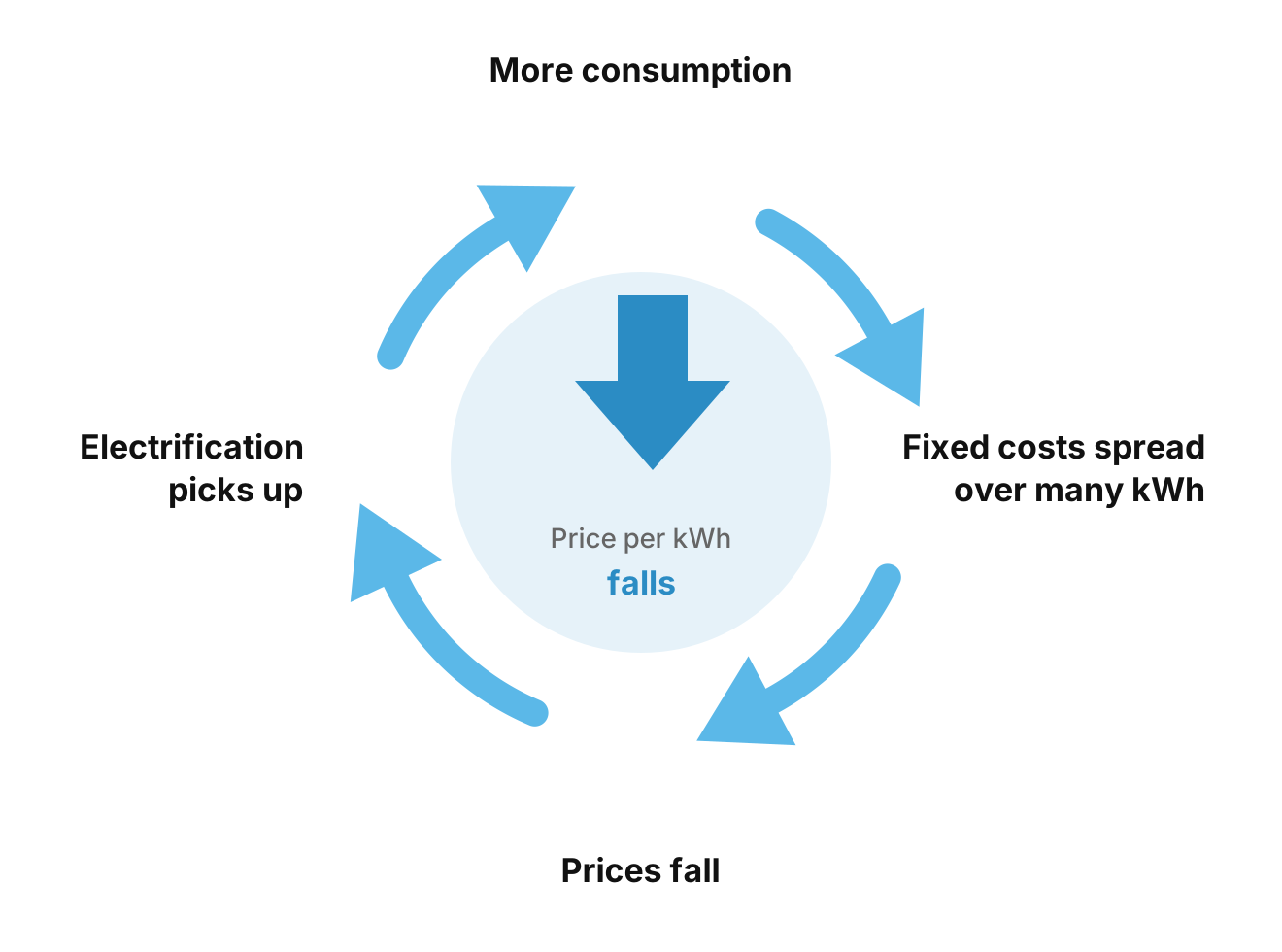
For cheaper electricity works twice over: in the short term, it relieves households during the current energy crisis. In the medium term, higher electricity consumption lowers overall system costs, because the fixed costs of grids and power plants are spread across more kilowatt hours. Electrification is thus security policy, location policy and price policy in one.
Heading 1
Heading 2
Heading 3
Heading 4
Heading 5
Heading 6
Lorem ipsum dolor sit amet, consectetur adipiscing elit, sed do eiusmod tempor incididunt ut labore et dolore magna aliqua. Ut enim ad minim veniam, quis nostrud exercitation ullamco laboris nisi ut aliquip ex ea commodo consequat. Duis aute irure dolor in reprehenderit in voluptate velit esse cillum dolore eu fugiat nulla pariatur.
Block quote
Ordered list
- Item 1
- Item 2
- Item 3
Unordered list
- Item A
- Item B
- Item C
Bold text
Emphasis
Superscript
Subscript
paragrph